
HOLLIES HUNTER TRIAL ELAND LODGE ARIAT NATIONAL HUNTER TRIAL CHAMPIONSHIP QUALIFIER 2027
Sunday 18 October 2026
Entries close in 2 days
4 upcoming events
Next event:
17/10/2026 Pole Work & Jump Clinic with Georgina Hayes
Find out more ..
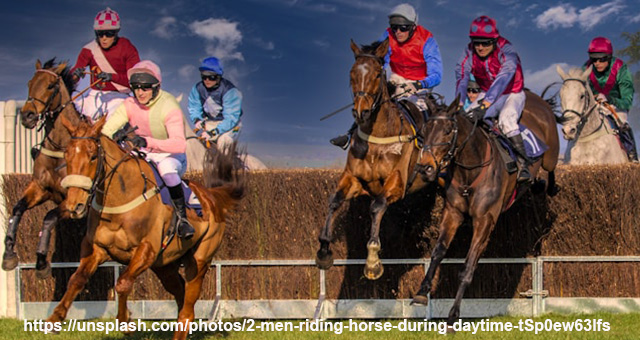
For the better part of a decade, the narrative surrounding National Hunt racing in Britain and Ireland has felt less like a competitive rivalry and more like a one-sided procession. Across the winter months, and particularly during the four agonisingly intense days of the Cheltenham Festival in March, Irish-trained horses have exerted a relentless grip on the sport’s most prestigious prizes. Driven by the all-conquering Closutton battalion of Willie Mullins, alongside heavy-hitting operations run by Gordon Elliott, Henry de Bromhead, and Gavin Cromwell, the Irish invasion routinely turned the Prestbury Cup into a foregone conclusion before the gates even opened on St Patrick’s Thursday.
For English jumps racing purists, the annual spring reckoning had become a sobering exercise in damage limitation. Yet, as the dust settles on recent campaigns and attention pivots toward the upcoming National Hunt season, a palpable shift in momentum is underway across the training yards of England. From the rolling hills of Somerset and Warwickshire to the historic gallops of Lambourn, English trainers are retooling their squads, refining their training regimes, and mounting a fierce counter-offensive. The period of passive surrender is over; the battle for jump racing supremacy is firmly back on.
To understand why genuine optimism has returned to English racing circles, one only has to look at the cold, hard mathematics of the Cheltenham Festival. While Willie Mullins has routinely taken home the top trainer accolade - cemented by big-race triumphs like Gaelic Warrior’s Gold Cup win, the overall balance of power has grown far more competitive than in previous years.
Where past renewals had seen embarrassing washouts that left the home team struggling to reach double figures, recent Prestbury Cup battles have concluded in much tighter scorelines that signal the gap is closing. English trainers did not merely feed on the scraps of handicaps and consolation events; they struck blows in premier Grade 1 contests, demonstrating that when British yards get their hands on elite equine ammunition, they possess the tactical acumen and horsemanship to topple the Irish giants.
If the revival of English jump racing has a modern figurehead, it is undoubtedly Dan Skelton. Operating out of Warwickshire alongside his brother, champion jockey Harry Skelton, Dan has dismantled the myth that an English stable cannot systematically match the firepower of the Irish superpowers across a grueling winter campaign.
Skelton’s crowning achievements, taking the fight for the British Jump Trainers' Championship right down to the wire and consistently breaking past the £2 million prize-money barrier—serve as a masterclass in modern sports management and long-term planning. As detailed by the Racing Post, Skelton’s success is built on elite squad depth, calculated target-mapping, and an unrelenting work ethic. By deliberately conditioning his string to maintain their peak form deep into the spring festivals at Cheltenham, Aintree, Ayr, and Sandown, Skelton proved that the Closutton machine is not invincible on British soil.
Crucially, the Warwickshire yard is not resting on its laurels. With a burgeoning roster of smartly bought young French imports, potent point-to-point graduates, and established Grade 1 performers, Skelton has established a blueprint that proves English yards can compete on scale, quality, and tactical execution.
While Skelton represents the vanguard of the new English era, the traditional superpowers of home-grown jump racing are quietly preparing their own seismic retaliations. At Seven Barrows in Lambourn, Nicky Henderson is stewarding a stable overflowing with unfulfilled potential and burning ambition. possessing some of the most devastatingly talented athletes in European racing.
When Seven Barrows is firing on all cylinders, Henderson remains an unmatched preparer of championship contenders, capable of going toe-to-toe with Closutton in any Grade 1 arena.
Meanwhile, at Ditcheat in Somerset, 14-time Champion Trainer Paul Nicholls has spent recent seasons executing a rigorous, patient transition. Recognising that older stable stars needed to be replaced by fresh blood, Nicholls and his bloodstock team have invested heavily in top-tier store horses and elite French prospects. Ditcheat is notoriously dangerous when written off; with a wave of exciting novice hurdlers and chasers ready to be unleashed upon the winter racecourses, Nicholls is primed to reclaim his habitual spot at the top tables of Saturday afternoon terrestrial broadcasting.
Perhaps the most encouraging sign for the long-term health of English National Hunt racing is the emergence of a hungry, ambitious young guard of trainers who refuse to be intimidated by Irish dominance. Yards across the country are modernising their facilities, embracing sports science, and upgrading their bloodstock acquisition strategies.
In Worcestershire, Olly Murphy continues to assemble a high-class string capable of mixing it at the highest level, while in Gloucestershire, Ben Pauling’s state-of-the-art Naunton Court facility is rapidly transforming into a consistent factory of Grade-class winners. Add in the meteoric rise of Harry Derham, a former assistant to Paul Nicholls who has made a sensational start to his own training career with an exceptional strike rate, and it becomes clear that the depth of English training talent is arguably stronger than it has been in a generation.
For racing enthusiasts and bettors alike, this resurgent domestic landscape sets the stage for one of the most compelling National Hunt seasons in recent memory. The days of blindly backing the Irish armada at short odds regardless of the opposition are rapidly coming to an end. Punters analysing ante-post markets and handicap weights are increasingly finding genuine value in home-grown runners whose credentials have been forged on the testing winter ground of Newbury, Sandown, and Haydock.
As the autumn rain returns to soften the turf and the early-season fixtures draw near, anticipation is building across the country. With national pride on the line, fans analysing the formbook and exploring the latest horse racing betting markets at Bet St George will find an inspiring contingent of English-trained runners ready to defend their turf. By combining tactical horsemanship, renewed financial muscle, and an unshakeable belief in their equine athletes, England’s trainers are no longer just making up the numbers, they are ready to turn the tide and reclaim jump racing’s crown jewels.


 0 entries £0.00